


Understanding Your Rights on Public Rights of Way
What a public right of way actually is
A public right of way is not a favour granted by a landowner. It is a legal right of passage over private land, recorded on a Definitive Map held by your local highway authority — usually the county council, unitary authority or national park authority. The map is the legal record; the path on the ground is the reality. When the two disagree, the map wins, though it can take patience to prove it.
These paths exist because people used them. Some are medieval tracks, some are Victorian footpaths to a mill or a church, and some were added to the map only recently after a long campaign. Once a route is recorded, it stays on the map unless a formal legal order changes it. You do not need permission to walk it, and you cannot be turned away by a new fence, a locked gate or a landowner's preference.
If a route has been used openly and without permission for twenty years, it may qualify for addition to the Definitive Map, though the old cut-off date for historic claims has been repeatedly postponed and the current direction of travel is towards repealing it altogether. If you think a path near you is missing from the map, speak to your local rights of way team sooner rather than later.
Footpaths, bridleways, restricted byways and byways
Not all rights of way are equal, and the difference matters most when you are on horseback, on a bike, or pushing a pram.
- Footpath — on foot only. A pushchair or mobility scooter is generally fine; a bicycle is not.
- Bridleway — on foot, on horseback, or on a bicycle. Cyclists must give way to walkers and riders.
- Restricted byway — as above, plus horse-drawn vehicles. No motor vehicles.
- Byway open to all traffic — legally open to vehicles, but often a muddy rutted track where driving is far from practical.
In Scotland the picture is different: statutory access rights under the Land Reform (Scotland) Act 2003 cover most land and inland water, provided you behave responsibly. The Scottish Outdoor Access Code is the thing to read before you go.
Reading the ground: waymarks, gates and the Definitive Map
Waymarking conventions in England and Wales are refreshingly simple once you know them. A yellow arrow means footpath, blue means bridleway, purple means restricted byway, and red means byway open to all traffic. A coloured arrow on its own is a waymark, not an instruction about direction of travel — paths are two-way unless an order says otherwise.
Signposts at points where a path leaves a metalled road are the highway authority's responsibility. After that, waymarking is often down to volunteer groups and parish councils, which is why some routes are beautifully signed and others rely on a faint gap in the hedge and your own good sense. Carry the relevant Ordnance Survey Explorer map, note the path number, and take a grid reference if anything looks wrong.
Your side of the bargain
Rights come with manners. The Countryside Code is short and worth knowing by heart.
- Close gates behind you unless they are tied open, and use the stile rather than climbing the fence.
- Keep dogs under control at all times. On open access land, dogs must be on a lead of no more than two metres between 1 March and 31 July, and near livestock at any time of year.
- Give livestock room, especially cows with calves. If cattle come at you, let the dog go — it will outrun you both.
- Take litter home, and don't light fires or leave gates swinging in the wind.
When a path is blocked, ploughed or overgrown
Obstructions are more common than they should be, and most are sorted out quietly once the right person knows. Report to the highway authority's rights of way team, giving the path number, a grid reference, the date and a photograph. A car parked across a gate, a barbed wire fence strung over a stile, a field of wheat with no reinstated line — all are classic cases.
Some useful rules: a footpath must be at least 1.5 metres wide and a bridleway 3 metres wide across a field. After ploughing, the line must be reinstated within 14 days, and in some circumstances within 24 hours once a crop is growing. Stiles and gates are the landowner's job; the surface and bridges over natural watercourses are the highway authority's.
If nothing happens, the law has teeth. Under section 130 of the Highways Act 1980 the authority has a duty to assert and protect public rights of way, and a formal notice can be served requiring it to act. That is a last resort, but knowing it exists is reassuring.
Stepping off the path
On a right of way you must stay on the line of the path. Elsewhere, open access land — registered common land, mountain, moor, heath and down — gives you the freedom to wander under the Countryside and Rights of Way Act 2000. It excludes gardens, cultivated land and most woodland, and the same lead rules apply. For a spontaneous detour across a field, you still need the landowner's permission. Ask politely; it is usually given.


Footpaths
-
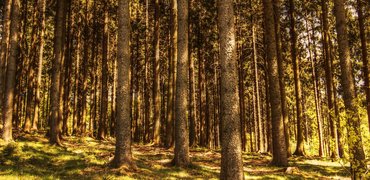
Learn to recognise oak, ash, beech, and hawthorn by leaf shape, bark texture, and silhouette to enrich every rural walk.
Walking Gear


-

Long established fact that a reader will be distracted
-

Long established fact that a reader will be distracted
-

Long established fact that a reader will be distracted



Stiles & Gates
Karla Gleichauf
12 May 2017 at 05:28 pm
On the other hand, we denounce with righteous indignation and dislike men who are so beguiled and demoralized by the charms of pleasure of the moment
M Shyamalan
12 May 2017 at 05:28 pm
On the other hand, we denounce with righteous indignation and dislike men who are so beguiled and demoralized by the charms of pleasure of the moment
Liz Montano
12 May 2017 at 05:28 pm
On the other hand, we denounce with righteous indignation and dislike men who are so beguiled and demoralized by the charms of pleasure of the moment